- EmDash
- WordPress
- Cloudflare
- Astro CMS
- headless CMS
- TypeScript CMS
- plugin security
- MCP server
- AI-native CMS
- serverless 2026
EmDash vs WordPress: Is Cloudflare's New CMS Actually a Better Alternative?

What is EmDash?
EmDash is a full-stack, open-source CMS built on Astro 6.0 and written entirely in TypeScript. It runs serverless on Cloudflare Workers (or any Node.js server), uses SQLite locally and Cloudflare D1 in production, and stores content as Portable Text — structured JSON instead of raw HTML blobs. Cloudflare positions it as the "spiritual successor to WordPress": same open publishing ethos, but designed for how developers actually build in 2026.
⚠️ EmDash is currently in v0.1.0 developer beta. Production adoption should be evaluated carefully.
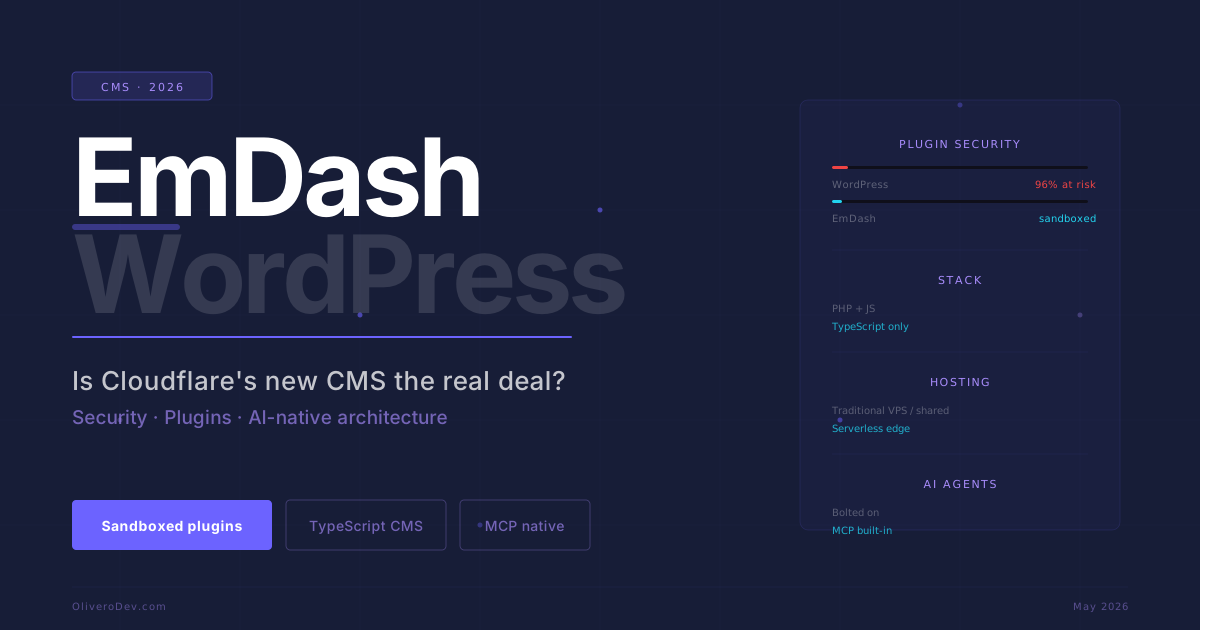
WordPress's Achilles heel has always been its plugin model. Any installed plugin gets unrestricted access to the database, filesystem, and user data. According to Cloudflare, 96% of WordPress security vulnerabilities originate from plugins — and 2025 saw more high-severity vulnerabilities in the WordPress ecosystem than the two previous years combined.
EmDash flips this model entirely. Plugins run in isolated Worker sandboxes and must declare a capability manifest upfront — similar to OAuth scopes. A plugin that requests `read:content` and `email:send` can do exactly those two things, and nothing else.
#EmDash vs WordPress: a developer comparison
#WordPress
- PHP + JavaScript mixed stack
- Plugins run with full trust by default
- MySQL/MariaDB, monolithic DB schema
- Massive plugin & theme ecosystem
- Traditional hosting (shared, VPS, managed WP)
- 20+ years of community & documentation
#
EmDash
- 100% TypeScript, end-to-end
- Sandboxed plugins with declared capabilities
- SQLite / Cloudflare D1, per-type tables
- Small but growing ecosystem
- Serverless (Cloudflare Workers, Netlify, Vercel)
- Built-in MCP server, AI-native by design
#The AI-native angle
This is where EmDash genuinely differentiates. Every instance ships with a built-in MCP (Model Context Protocol) server. An AI agent — Claude, Cursor, or any coding assistant — can create content types, manage entries, configure plugins, and trigger deployments programmatically.
Content is stored as Portable Text (structured JSON), so agents can parse, modify, and generate content without touching raw HTML. For teams building AI-augmented workflows, this is a meaningful architectural advantage.
#Who should look at EmDash right now?
EmDash makes most sense if your pain points are: plugin security review overhead, WordPress's mixed PHP/JS stack, or building content workflows where AI agents are first-class actors. If you need a mature plugin marketplace and years of production battle-testing, WordPress is still the safer bet.
#
Bottom line
EmDash is the most architecturally interesting thing to happen in CMS land in years. The plugin sandboxing model alone is a genuine contribution to the space. But it's v0.1.0 — treat it as something to evaluate and monitor, not immediately deploy for production. The direction is right; the ecosystem needs time.
Need your website to convert better too?
I can review your site, find the biggest friction points, and map clear improvements for performance, SEO, UX, and sales.
Alexis Olivero
IT & Frontend Developer specialized in building modern digital solutions with a strong focus on user experience, performance, and scalability. Experienced in WordPress, Webflow, and frontend technologies, applying product thinking and IT best practices to create efficient, secure, and business-oriented web platforms.